I could have been Nolan Wells.
I know that’s a wild statement. I second-guessed it as soon as I typed it. But the truth is, at least twice during my middle and high school years—at a predominantly white, Southern Baptist private school, mind you—I could have been.
Part of me wants to apologize for how that statement might sound to some of the friends who are still in my life today. Many of them were there during those years. I’ve stood beside them on their wedding days. They’ve celebrated my biggest milestones, and I’ve celebrated theirs. But apologizing would require me to pretend these things didn’t happen under their noses. It would require me to deny that these experiences existed while I was surrounded by people I genuinely loved.
The story of Nolan Wells is heartbreaking. I look at that young man sitting on that boat with those three boys and think, his parents let him go because they thought he was safe. My parents let me spend weekends, afternoons and late nights with my white friends because they believed I was safe. And for the most part, I believed it too.
Until the moments when I didn’t.
“You are not them. You cannot do what they do.” Or some version of that sentence. I heard it constantly growing up. My parents spent a lot of their hard-earned money to send my sister and me to a prestigious private Christian school. A school rooted in the very worst parts of segregation and racism, though that’s another story for another day. I was the social one. I always wanted to be with my friends. Sleepovers. Football games. Church events. Birthday parties. Wherever they were, I wanted to be. I loved my friends. Several of them are still on my iPhone Favorites list.
But before I walked out the door, my dad almost always reminded me: “Remember who you represent. You are not like them.”
At the time, I thought he was talking about rules and just handing my racial mumbo jumbo that didn’t apply because I was different. My friends were different.
Looking back, I know he was talking about consequences.
If my friends made a bad decision, they might get grounded.
If I made the same decision, there was no guarantee I’d receive the same grace.
To this day, my parents have never had to pick me up from a courthouse, a jail or a hospital because I was terrified of proving my them right. I left some scenes early. I flat out didn’t go sometimes. I watched my friends get away with things I wouldn’t have even considered attempting because somewhere deep down, I believed the margin for error wasn’t the same for me.
Still, despite those warnings, I never walked through those years feeling like I didn’t belong. I wasn’t constantly afraid. I wasn’t looking over my shoulder every second.
But then there were moments that reminded me I probably should have been.
I’ve watched the discourse surrounding Nolan Wells’ story, and I’ve seen people insist that it shouldn’t immediately be viewed through a racial lens. And honestly, I understand why they say that. We don’t know everything that happened. We probably never will.
But I also understand why so many Black people immediately saw themselves or their children in him.
I know I did.
My dad didn’t say those words because he wanted me to fear white people or hate my friends. He said them because he understood something I was too young to appreciate. Throughout my years at that private Christian school, I ran into wall after wall that reminded me I could be everything they wanted me to be—smart, respectful, involved, kind—and still not be the right color.
And if I messed up?
Now I wasn’t the “safe” Black kid anymore.
Now I wasn’t one of the “good ones.”
Every Black person understands, in one way or another, that one of the most dangerous places you can find yourself is inside someone else’s prejudice. My parents weren’t trying to make me paranoid. They were trying to make sure I never unintentionally gave someone permission to turn their imagination into my reality.
Looking back now, I understand why.
The first incident—or really, a series of incidents—happened between seventh and ninth grade.
There was a group of boys a grade ahead of me who had fully committed themselves to becoming the stereotypical high school jocks. They were decent enough athletes to be loud about it, average-looking enough to overcompensate, and completely emboldened by their whiteness.
During P.E., they made me their target.
I was usually faster than most of the girls and, occasionally, a few of the boys.
Cue the theme from Get Out.
God forbid the Black girl outrun or outplay a white boy.
At that point, I wasn’t physically unsafe. But I learned very quickly that I wasn’t emotionally or mentally safe either.
It was during one of our cross-country P.E. runs through the woods behind the school that someone called me a hard-ER nigger for the first time.
My parents—two people who grew up during the Civil Rights Movement, one of them here in the South—had prepared me for the possibility that something like this might happen.
Still, preparation doesn’t soften impact. Nothing prepares you for hearing it directed at you.
But the part that’s stayed with me after all this time isn’t even the word itself.
It’s what happened afterward.
Or rather…what didn’t happen.
I wrote about the incidents in my little weekly English journal assignment. She checked them to make sure that we were writing. I knew she would see it and though maybe she would help.
My teacher never mentioned it.
I waited for someone to call those boys into the principal’s office.
Nothing.
I waited for someone to ask if I was okay.
Nothing.
Eventually, the boys mostly left me alone. By the time I was a junior, one of them was practically a casual acquaintance. We’d joke in class. Work on assignments together.
But I never forgot how he’d been introduced into my life. I kept him at arm’s length.Not because I hated him.
Because I’d already learned what he was capable of becoming when he was surrounded by the right audience.
More than anything, I remember wondering why my friends liked those boys so much. I wondered why nobody ever told them to stop.
Why I could get in trouble for talking during class, but someone could humiliate me because of my race and just simply…shower and go on with their day.
The second time came during my senior year. By then I had a car, a little freedom and a lot of trust from my parents. For the most part, my friends and I were good kids. We went to parties here and there, chased boys, made questionable teenage decisions and somehow managed to avoid any real trouble.
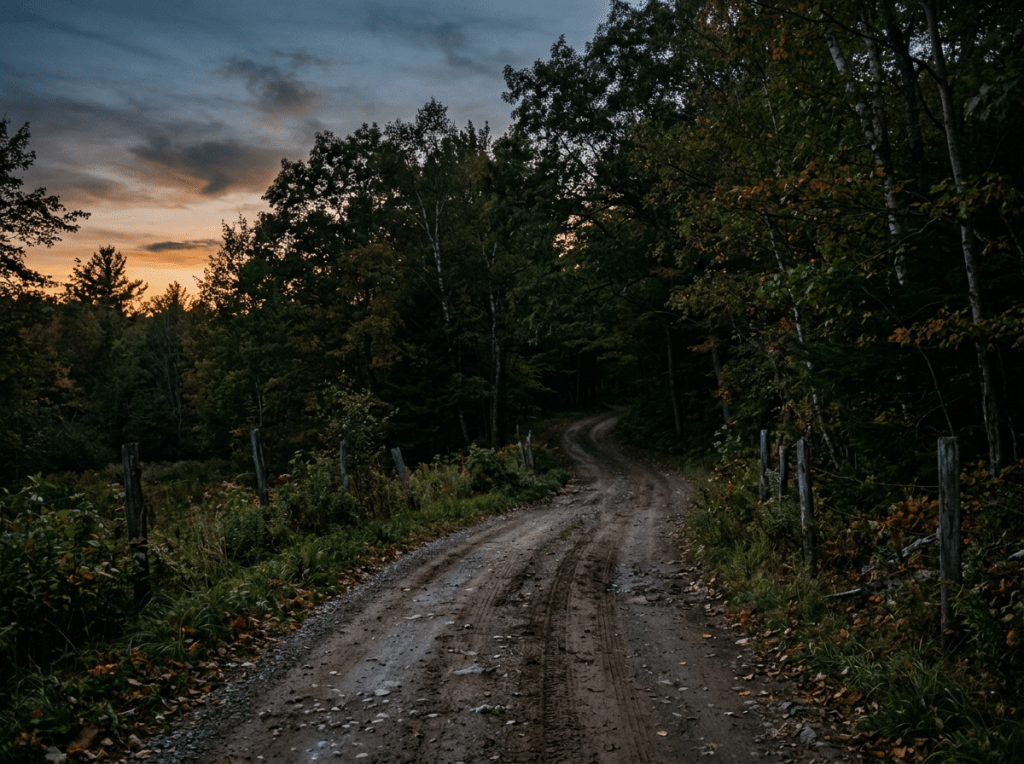
Then one night someone suggested we head to a party at a barn in the woods.
My Spidey senses immediately kicked in.
My boyfriend at the time, who was also Black, had the exact same reaction.
“A party.”
“At a barn.”
“In the woods.”
Absolutely not.
He wasn’t about to let me go by myself, so he came too.
There were enough of us that it didn’t seem unreasonable. Guys and girls. People I knew well. We piled into our cars and headed toward what can only be described as BF USA.
When we finally pulled up…it really was a barn in the woods.
You could hear the music before you could see anyone.
As soon as we walked inside, everything stopped.
You know those old western movies where the outlaw pushes through the saloon doors and every conversation dies instantly?
It felt exactly like that.
Except this wasn’t a movie.
It was oddly terrifying.
It felt like every face turned toward us.
Toward me.
Toward my boyfriend.
I remember one guy stepping forward with this look on his face that immediately made my stomach drop. I didn’t know him. I didn’t know anyone there besides the people I’d arrived with.
Before I could process what was happening, my boyfriend quietly stepped in front of me.
He didn’t make a scene.
He didn’t argue.
He simply started backing us toward the door.
As he did, he gave one quick nod to our friends.
It said everything.
“We’re good. Y’all enjoy yourselves. We’ll see you back at the house.”
And we left.
Still walking backwards.
We ended up at my friend’s house, played our own music, laughed, talked and waited for everyone else to come back. They actually weren’t far behind us.
To this day we laugh about how lame the party apparently turned out to be.
Nothing happened.
Nobody chased us.
Nobody threatened us.
Nothing that would make the evening memorable to anyone else.
But I’ve often wondered what would have happened if my boyfriend hadn’t insisted on coming.
What if I’d ridden with someone else?
What if I’d felt obligated to stay because I didn’t have a car?
What if I hadn’t been able to remove myself from a situation that suddenly felt very wrong?
My friends never really asked why we left so quickly. They never talked much about what happened after we drove away.
Maybe nothing happened.
Maybe something was said.
Maybe I’ll never know.
I’ve stopped trying to imagine it.
I understand that neither of these memories ended in death. Nothing devastatingly sinister happened to me in those woods, and I would never pretend that my experiences carry the same weight as the death of Nolan Wells. But they do explain why his story reached into something so old and familiar inside me.
There were moments when I, as a young Black girl moving through predominantly white spaces, had to study a room before I could simply exist inside it. I had to think about what I said, how I reacted, whether I should leave and whether the people I called friends would recognize danger when it was aimed at me. I learned early that friendship and safety are not always the same thing.
Someone can love you and still fail to defend you.
Someone can welcome you into their world without understanding that their world may not welcome you back.
I know now why my parents worried every time I left their doorstep with people they knew and trusted. They weren’t necessarily afraid of my friends. They were afraid of the spaces those friendships could carry me into—spaces my friends could move through without question, but where my presence or even my safety might be questioned immediately.
My dad’s warning was never simply that I couldn’t do what they did.
It was that I might not survive the same assumptions, the same mistakes or the same moment of carelessness in the way they would.
I don’t know what high school feels like for Black children today. I have close proximity to a beautiful, brilliant, kind biracial seventeen-year-old whose mother is one of my two best friends. To my knowledge, she has never experienced the kind of overt racism or ugly micro-aggressions that shaped parts of my adolescence, and I thank God for that. That’s not to say those things don’t exist.
I’m not that naïve.
But I pray her experience truly is different.
I pray she always gets to walk into rooms without first calculating how quickly they could become unsafe.
I pray she never has to wonder whether she’s being seen as herself or as someone’s assumption.
I pray she gets to be seventeen without carrying the weight of proving she belongs.
Because when the ugliness of this world takes aim at the beautiful, kind and intelligent things in it, the damage isn’t always immediate. Sometimes it settles quietly into your bones and announces itself later—in the stories that stop you in your tracks, in the warnings you finally understand, in the memories you thought you’d long since forgotten.
I don’t get to stop being Black.
I don’t get to set my race down long enough to view every tragedy as racially neutral. Whether people think that’s fair or not has never really mattered, because race has shaped too many of the warnings I received, too many of the rooms I entered, too many of the calculations I learned to make before I even realized I was making them.
So when I saw Nolan Wells’ face, my heart broke immediately.
Not because I knew exactly what happened.
I don’t.
Not because I know who is responsible.
I don’t.
And certainly not because I believe every white friend is dangerous.
I don’t.
My heart broke because I saw a Black child.
I saw his Black mother.
I saw a Black family that trusted their son to spend time with people he called friends, believing what every parent wants to believe—that he would come back home.
And perhaps that’s what has stayed with me more than anything else. Black parents can give us every warning they know to give. They can teach us to be respectful, careful, aware and wise. They can remind us, as my dad reminded me countless times, that we are not them and cannot always do what they do.
But eventually, they still have to open the front door.
They still have to trust that the people smiling beside us will value our lives once no one else is watching.
My parents did.
Nolan’s mother did.
Mine got me back.
She didn’t.
And maybe that’s why I can’t stop thinking about him.
 Relatable Rhythms